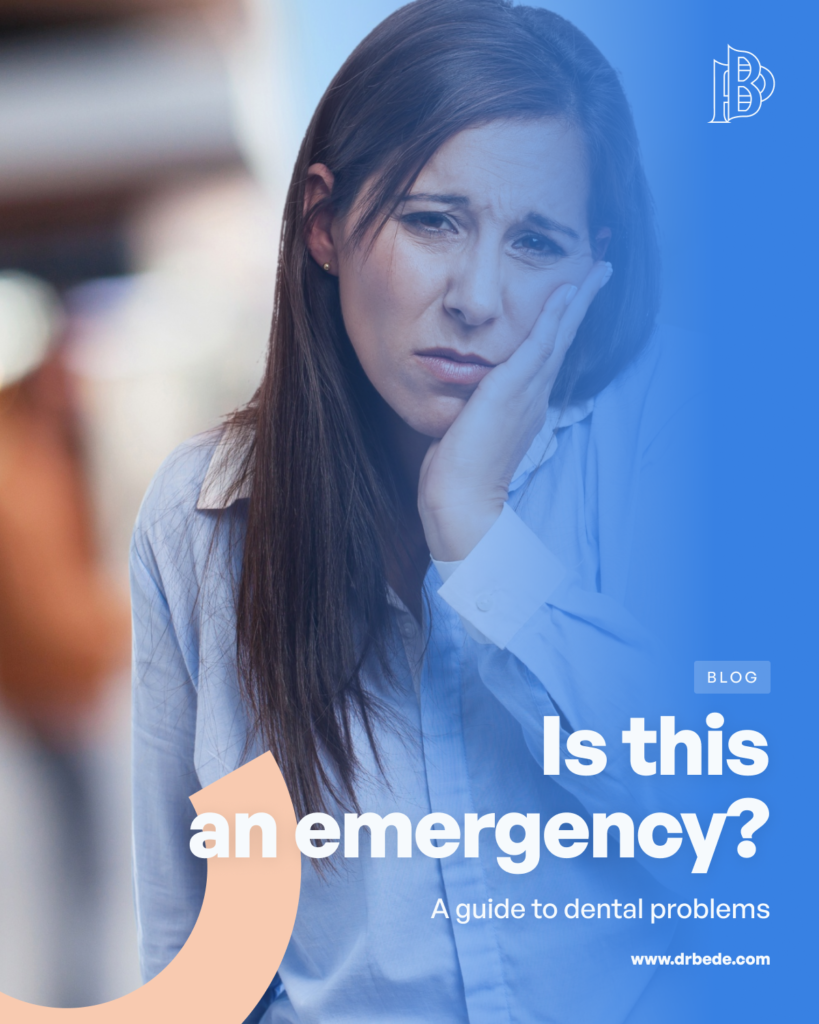
Biting pain is a short, sharp sensation that most often appears during meals and stops after a few seconds. People who experience this discomfort in one of their teeth often start avoiding chewing on that side.
Avoiding chewing on one side of the mouth for a long period of time is not good for the health of the tooth or gums. There are several reasons why this type of pain occurs, and to determine the exact cause in your case, we recommend visiting your dentist for an examination.
The Most Common Reasons for Pain When Biting
Cavities
Pain when biting can sometimes be one of the first signs that it’s time for a dental check-up. It may also appear in combination with other stimuli, such as cold or sweet food. This problem is easily solved – once the tooth is restored, the pain will stop.
Tooth Fracture
If a tooth breaks, sensitivity often appears at the moment of releasing the bite. The treatment depends on the extent of the fracture – it can be restored with a filling, a buildup, or a ceramic crown.
Unfortunately, sometimes the tooth breaks vertically below the gum line, in which case it is almost impossible to save it.
Fractured Old Filling

Every filling has a lifespan, and after several years it can break or separate from the tooth. This can cause pain when biting, as well as discomfort in the gums. Just like with cavities, the solution is to replace the old filling with a new one.
Severely Damaged Tooth with Chronic Nerve Inflammation
When a large portion of the crown is destroyed by decay, and the nerve is affected by chronic inflammation, pain can appear during meals. This happens because food puts pressure on the nerve exposed to the outside environment.
Depending on whether the tooth can be properly treated and restored, your dentist will advise you – based on a clinical exam and an X-ray – whether it can be saved or extraction is necessary.
This type of pain often appears in children with primary (baby) teeth.
Pain After a Filling
This type of pain can appear for two reasons:
-
Tooth’s reaction to a new filling – sensitivity usually appears right after the filling is placed and should gradually fade.
-
Incorrect filling height – if after treatment your bite feels too high, you should contact your dentist as soon as possible for an adjustment. If a tooth is exposed to this type of pressure for a longer period, the nerve inside may eventually die.
Pain when biting can have several causes – from simple ones, such as cavities, to more complex ones, like fractures or nerve inflammation.
That’s why it’s important to visit your dentist at the first signs of this problem to prevent further complications.