Tooth drilling is a dental procedure in which the tooth is reduced on all sides. This treatment is necessary for the fabrication of various prosthetic restorations, such as dental crowns and bridges. This part of the procedure is often the most concerning for patients, as the term “tooth drilling” itself sounds painful and unpleasant.
For this reason, we want to explain the entire process of tooth preparation for prosthetic restorations in detail, so that the treatment can be as comfortable and stress-free as possible for you.
Dental Examination and Treatment Planning Before Tooth Drilling
Based on a clinical examination and analysis of dental X-rays, and taking your wishes and expectations into account, the dentist creates an individual treatment plan. This includes determining exactly which teeth need to be drilled in order to place crowns or bridges.
Depending on the number of teeth that require preparation, the dentist will decide whether tooth drilling will be performed in a single appointment or divided into several visits.
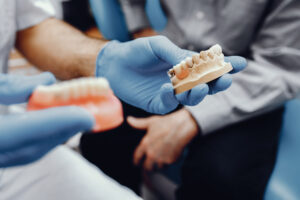
Anesthesia During Tooth Drilling
Tooth drilling would be a very uncomfortable experience if performed without local anesthesia. For this reason, anesthesia is always part of the procedure. It allows the dentist to prepare the teeth in a completely painless manner.
Depending on how many teeth are being prepared and how much anesthesia is required, the number of treatment sessions is planned accordingly. The injection site may remain sensitive or slightly painful for a few days, especially if multiple doses of anesthesia were necessary.
Temporary Crowns After Tooth Drilling
Temporary crowns are made of plastic and are used to make the waiting period more comfortable while the final ceramic crowns or bridges are being fabricated. These temporary crowns are usually designed to resemble your natural teeth before drilling.
In addition to their aesthetic role, temporary crowns also serve an important protective function, shielding the prepared teeth from temperature sensitivity and reducing discomfort.
What Happens During the Tooth Drilling Procedure
The tooth drilling procedure itself is painless when performed under anesthesia. During the treatment, continuous cooling of the tooth with water from the dental handpiece is necessary, which means breathing through the mouth is not possible.
If your nasal passages are blocked due to a cold or allergies, it is recommended to use nasal drops beforehand to ensure proper nasal breathing, or to postpone the procedure until breathing is comfortable.
The Period While Waiting for Crowns or Bridges
The fabrication of crowns and bridges usually takes about 10 days. During this time, prepared teeth may be sensitive to hot and cold temperatures. If you do not have temporary crowns, it is recommended to consume foods and drinks of moderate temperature.
Chewing is allowed, and a soft or liquid diet is not required, but very hard foods such as almonds, hazelnuts, popcorn, and similar items should be avoided.
If you have temporary crowns, eating will be easier and tooth sensitivity will be reduced. However, it is still important to avoid biting or chewing very hard foods.
Oral Hygiene of Prepared Teeth and Temporary Crowns
Maintaining proper oral hygiene is essential even when teeth have been drilled. The same applies to temporary crowns. Brushing your teeth in the morning and evening helps keep the teeth clean and the gums healthy until the prosthetic work is completed.
If food accumulates around prepared teeth or temporary crowns, it can lead to gum inflammation, which may delay the completion of the treatment.
If brushing with a regular toothbrush causes discomfort, you can use special ultra-soft toothbrushes with very fine bristles, designed for patients after surgical or prosthetic dental procedures.
Tooth Sensitivity After Cementation of Crowns and Bridges
After the prosthetic treatment is completed, crowns or bridges are permanently cemented onto the teeth. From that day onward, thorough oral hygiene is essential, just as it is with natural teeth.
In the first few days after cementation, the teeth may still be slightly sensitive, but this discomfort usually resolves completely within a few days.
Crowns and bridges should be regularly checked by a dentist at least once a year. In addition, ultrasonic scaling and professional dental cleaning are recommended once or twice a year to maintain healthy gums and ensure the longevity of the prosthetic restorations.