

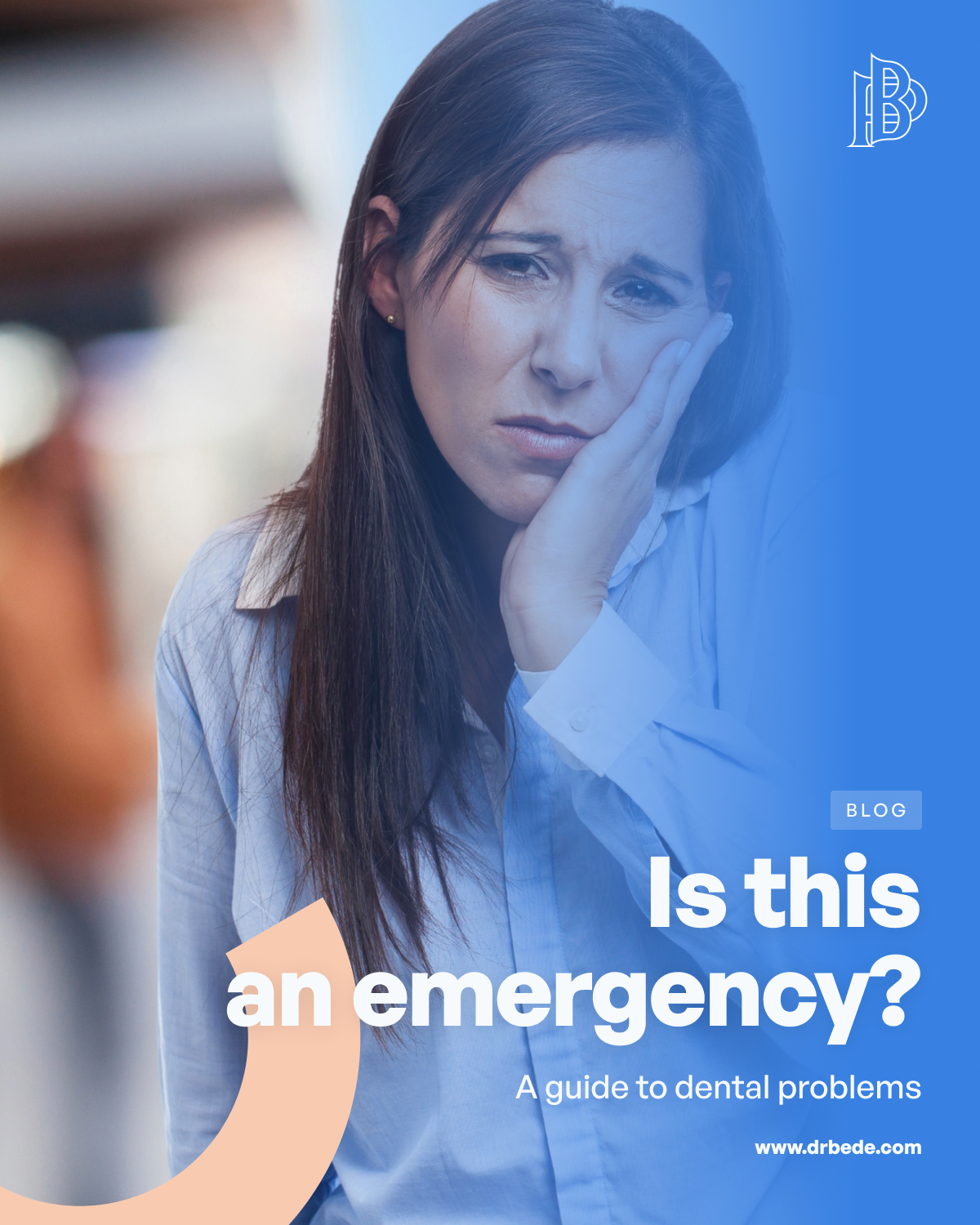
Tooth pain or discomfort in the oral cavity can often cause concern. However, while some conditions require urgent dental care, others can safely wait for a scheduled appointment. Understanding the difference can help you react in time and protect your oral health, while also avoiding unnecessary worry. Below, learn how to recognize whether a condition is urgent or not.
Dental emergencies
- Severe spontaneous pain, throbbing – this pain occurs at rest and is not related to eating or chewing. Patients usually need painkillers. It requires urgent care as it indicates pulp inflammation.
- Swelling of the face or jaw – a very urgent condition, often associated with infection, abscess, or wisdom tooth eruption. Requires immediate dental visit and possible antibiotics.
- Difficulty opening the mouth or swallowing – may be related to wisdom teeth or lower molar issues.
- Bleeding after tooth extraction – if bleeding continues after the same or previous day, contact your dentist immediately.
- Trauma, fall – any dental injury requires X-ray and examination.
- Severe pain after extraction – strong pain not relieved by analgesics may indicate dry socket (alveolitis) and requires urgent care.
- Tooth fracture with pain – if part of the tooth breaks and pain persists, nerve damage likely occurred.
- Presence of pus and bad taste – clear signs of infection that require immediate treatment.
- Bleeding after soft tissue injury – injuries to lips, tongue, or cheeks with persistent bleeding require urgent care.
Non-urgent dental conditions
- Sensitivity to hot, cold, sweet, or pressure – usually indicates cavities, but not an emergency.
- Occasional pain – requires dental check-up, but not urgent.
- Bleeding gums – often due to inflammation or tartar buildup; professional cleaning is needed.
- Aesthetic issues, tooth discoloration – not urgent and can be treated later.
- Chipped tooth without pain – not urgent, but should be treated soon to prevent complications.
- Pain after dental treatment – mild discomfort after procedures is common and usually temporary.
- Gum recession – a chronic condition that requires attention but not urgent care.
Recognizing the difference between urgent and non-urgent dental conditions can save you time, money, and help prevent serious complications. When in doubt, it is always better to consult your dentist and react in time rather than wait for the problem to worsen. Timely action often means simpler and more successful treatment, as well as preserving the health of your teeth and gums.


